
Venues Day: Who holds the keys?
Blog post


On Venues Day 2026, Co-operatives UK’s Youth Ambassador Louis Burnay celebrates the power of community to keep music and arts spaces alive.
Today is Venues Day 2026 – a gathering of music venue professionals in London, hosted by the Music Venue Trust (MVT) to support, improve and sustain the UK’s live music network. To mark the occasion, Co‑operatives UK’s Louis Burnay spotlights the organisations pioneering community‑run venues that empower people at grassroots level to preserve and evolve British cultural life.
Type ‘music venues’ into your search bar today, and among the results you may find articles citing a sector on the brink of collapse. Or nostalgia‑ridden articles of far-away times: cheap pints and packed tiny rooms now unfathomable in the modern metropolis of high‑rises, extortionate rents and prohibitive licensing laws.
This picture is not entirely the truth.
Author and journalist Ed Gillett argues that pessimism for the sector is pushing people away and forming part of the problem. He’s not suggesting we ignore reality. But he is proposing that we move forward by addressing the undercurrents of optimism that are slowly surfacing: “A prevailing narrative in which nightlife remains permanently on the brink of collapse affords no room for this kind of nuance, and no opportunity to leverage it for more diverse forms of advocacy,” he argues. Community ownership is one of these forms of advocacy.

The co‑operative model is already being used across the country to bring music and arts spaces back in to local people’s hands. Charity Music Venues Trust took a pioneering step to do just that as part of its quest to protect, secure and improve UK grassroots music venues.
It set up Music Venue Properties (MVP), a charitable Community Benefit Society created to save local venues through community ownership. Since its inception, MVP has launched two community share offers. The first raised £1.5 million and brought five venues into community ownership. Its most recent offer raised another £1.5m (and counting) and will take over a further nine venues.
Alongside this, Wharf Chambers in Leeds, Cafe Kino in Bristol, Sister Midnight and the Joiners Arms in London, The Globe in Newcastle, The Trades Club in Hebden Bridge, The Forum in Darlington and Pink MCR are just a few of co‑operatively run venues building vibrant culture whilst negotiating consistent pressure – each one of them owned by their members and shaped by the communities that use them.
Co‑operatives UK has been supporting our member Stir to Action’s campaign to save 21st Century Social Clubs. It’s their mission to protect, strengthen, support and modernise these historic spaces, many of them music venues that are often forgotten, lacking a bridge between the traditions of early social club culture and modern day society.
This campaign is another example of the huge importance of vital community‑run assets – and how the co‑operative movement is working hard (often behind the scenes) to keep these spaces alive.
Writing for MixMag, researcher and DJ Mike Smaczylo called for support for community and co‑operatively owned venues to disrupt the traditional ownership dynamic:
And this element is crucial: community‑run spaces are shaped, not just on assumptions or data, but by the artists, performers, workers, attendees and the local community – with the audience taking on a new, more empowered, role.
The spaces are created from the inside‑out rather than the other way around. These are “ground‑up“ – not top‑down – spaces that understand and serve the need. And the co‑operative model empowers them to serve that need better than any other.
Co‑operatives don’t just offer a way of securing the future of these venues, but ensure that arts and music culture is made in a more democratic and fair way – supporting marginalised groups, providing more hands‑on opportunities for the local community and platforming young talent. These spaces become more than just businesses – they provide vital cultural infrastructure.
As Gillett argues: “Instead of viewing UK nightlife as either dead or dying, then, perhaps it’s time to think about it transforming: still a complicated and painful process, and one which inevitably involves a degree of loss, but one that also allows for more open-ended visions of the future.“
Though rent prices, licensing regulations, noise complaints and rising business rates act as a constant knife to the throat, community ownership and co‑operative values are proving a strong route to reclaiming control, building longevity and re‑imagining the way we run things – changing how culture itself is built and opening minds to different “visions of the future.“
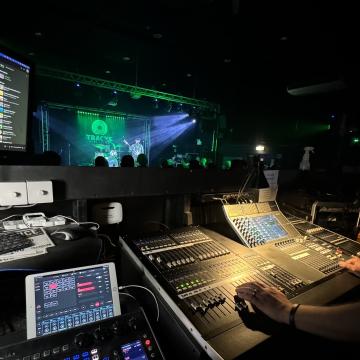
The Forum Darlington: Serving the community through music
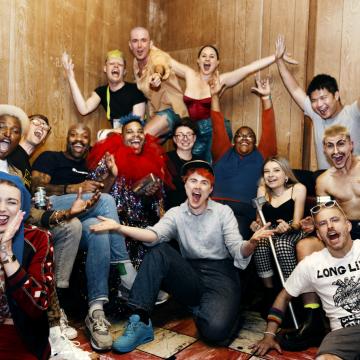
Friends of the Joiners Arms – a ground-breaking community shares venture
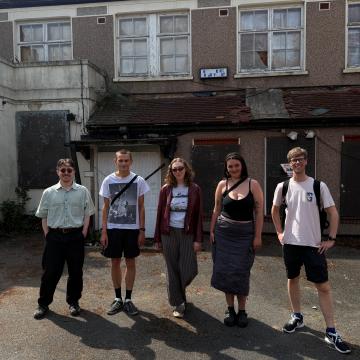
Keeping culture alive through the power of co-operation
