Co-operatives in Scotland: Turning community wealth building into action
Blog post


A new law says Scotland should grow its co-operatives. So why is the funding being cut? Fresh from the SNP Conference, Co-operatives UK's Policy Lead James Wright explores what Shetland’s historic community wealth fund can teach us – and what ministers must do next.
Travelling home from the SNP Conference in Aberdeen, I reflected on the state of play for co-operatives in Scotland, writes James Wright, Policy and Development lead at Co-operatives UK. My key take away is simple: we need to be bolder.
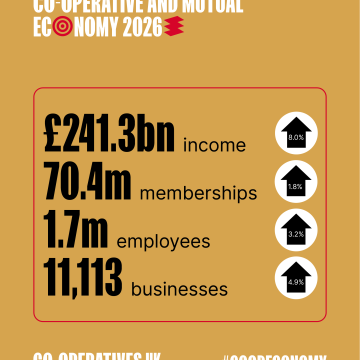
New data shows the co-operative economy in Scotland is, by international standards, small and growing slowly. The conditions for co-operatives, as for all enterprise, are very challenging just now, with high costs, narrow margins and considerable instability. Yet the data also shows that Scottish co-operatives punch above their weight in terms of economic and social impact.
We have big opportunities to secure better policy for co-operatives in Scotland. Co-operatives are an essential pillar of the world-leading community wealth building model. The Community Wealth Building Act creates legal duties for government, agencies and local authorities to promote the growth of these businesses. Councils are already publishing action plans with commitments on co-operatives. Our priority now must be to help turn great policy into real world action.
At the SNP Conference, I chaired a packed fringe on this issue, alongside Minister for Public Finance (and community wealth), Hannah Mary Goodland MSP, and partners from Social Enterprise Scotland, All Together Money and the EOA. Hannah Mary tells a compelling story, about how her Shetland community demanded more from the oil industry in the 1970s, and via the Zetland Community Council Act built a £1bn community wealth fund for themselves. She says communities, and Scotland as a whole, should be equally demanding now, as the renewable energy boom sweeps the country.
This is not just about community ownership of renewables, brilliant as that is. It’s about creating intergenerational wealth, democratically controlled by communities, which they can invest in a wider economic and social transformation, including co-operative development. Hannah Mary, who is tasked with closing a £5bn gap in Scotland’s finances, is partly attracted by the opportunity to divert some private money, otherwise extracted by the global elite, to fund this wider transformation.
While there is a historic opportunity to emulate Shetland on a national scale, the case for spending more of the current budget on co-operative development, is equally compelling. A relatively modest shift in the hundreds of millions already earmarked for businesses support, toward programmes that cater to the distinctive features of co-operatives, would be game-changing. More resilient, productive businesses, creating more and better livelihoods, all while sharing wealth and power more efficiently. If you layer on community resilience, social cohesion, food security and successful public service reform, it should be a no brainer.
Social housing, done differently
Yet Scottish Enterprise continues to defund co-operative development. In response, the sector in Scotland has two clear asks of ministers: restore this funding, while actively supporting our ambition for new sector-led development infrastructure. The Scottish National Investment Bank and some dormant assets should also be used to support co-operative capital raising. The mention of co-operative development in the Programme for Government is encouraging. More still, assurances from officials that co-operatives are fully in scope of the planned Social Economy Strategy. We can turn a fragmented support landscape into an effective, well-resourced ecosystem. But this will take at least a year. In the meantime, Scottish government should fund an interim co-operative development programme, commissioning support from specialists.
Co-operatives UK is working directly, and with friends in the Inclusive and Democratic Business Alliance, to make this case to government. We are also supporting MSPs to establish a new Cross Party Group on Co-operatives and Mutuals in the new Parliament, which will be a vital platform for advocacy in Holyrood.
We hope to have more to share soon. In the meantime, if you would like to discuss our policy work in Scotland, please email our Policy Officer: [email protected].

West Granton Housing Co-op: Social housing done differently