Employment Rights Act 2025: Key changes employers must prepare for now
Blog post

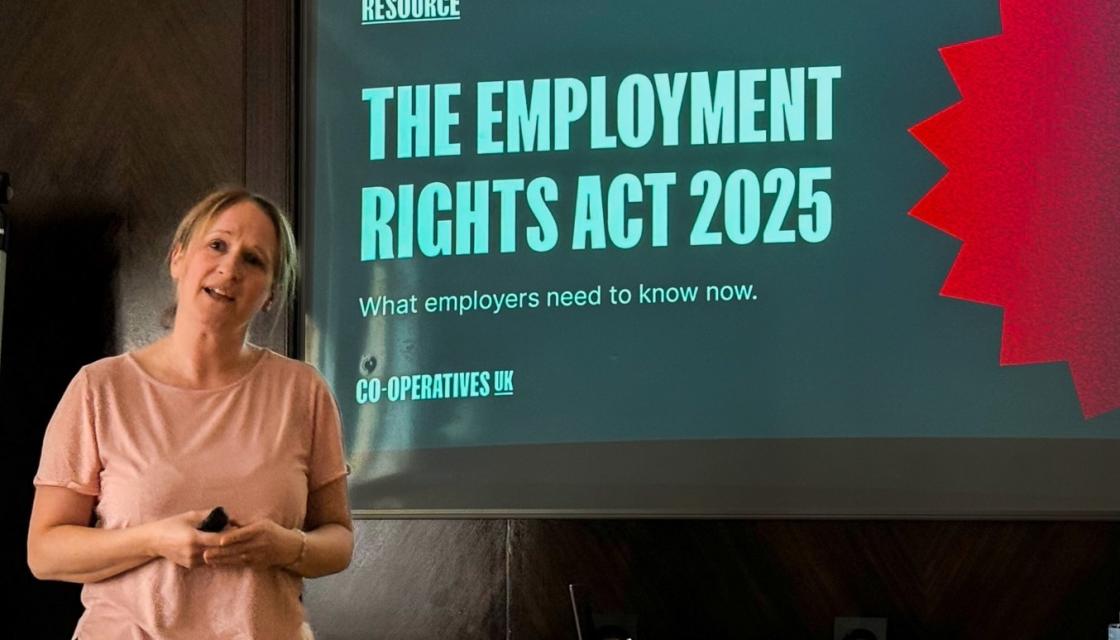
From day-one rights to changes in unfair dismissal and sick pay, the Employment Rights Act 2025 will reshape how employers manage people. While many of the reforms are being phased in, this blog from Co-operatives UK's HR Manager covers the steps you should take now.
The "biggest upgrade to workers' rights in a generation" is almost upon on. That's the government's wording and it relates to the Employment Rights Act 2025, writes Kate Fielding, HR Advice Manager at Co-operatives UK.
There's some significant changes that employers absolutely need to be aware of. Let me give you a scenario. What if you have a standard six-month probationary period for all new employees, and decide not to confirm someone in post at the end of that period?
Until now, that’s often been a relatively low-risk decision. But under the new rules, that same employee could already have the right to claim unfair dismissal. Suddenly, something that felt like a routine HR process becomes a potential legal risk, especially if concerns haven’t been raised, documented and managed properly during those first few months.
Employment Law Update webinar
I’ve seen situations where issues were only addressed right at the end of probation, when it was already too late to demonstrate a fair process. Under the new framework, that approach simply won’t hold up. Managers will need to be clearer, quicker and more consistent from day one, not month six. For many organisations, probation periods will need to be shorter, more structured, and more robust.
We've produced a more comprehensive guide to the Act, setting out in more detail the key changes and expected timescales. You can read and download it here. But let's look at the areas that'll have the biggest impact on employers (and some solutions):
- Reduction in the service qualification for unfair dismissal from two years to six months. Employers operating six-month probationary periods as standard should review this practice and ensure they are dealing with any issues early
- Changes to zero hours. A number of co-operatives may use zero hours contracts as a way of managing rotas and ensuring they have cover when needed. The new Act doesn't ban zero hours contracts (contrary to some media reports) but does give employees the right to be offered guaranteed hours. We're still waiting for regulations to come into force to set out what this should look like in practice. In the meantime, co-operatives should review their practices and ensure they have records in place to monitor their zero hours contracts
- Removal of three waiting days and lower earnings limit for Statutory Sick Pay (SSP). While many co-operatives have enhanced sick pay arrangements, any who operate SSP only, are likely to see their sick pay bill increase. Co-operative and community businesses should make sure that they have robust absence management procedures in place to help them manage short term absence
- Fire and hire. Changes to dismissal and reengagement ('fire and rehire') rules mean this will be automatically unfair in most circumstances
The easy wins
Just check your policies and procedures to make sure they're up to date (here's the plug for our customisable template handbook). You might also want to think about guidance and/or training for managers - or those in charge of HR - on some of the changes.
There isn't any need to do loads at the moment because the changes are coming in gradually, with some of the biggest ones still subject to consultation. We'll do more updates later in the year as more details emerge.
What are the consequences?
These represent new statutory rights for workers, meaning that employers who fail to comply could find themselves at risk of employment tribunal claims. This could mean anything from fines to reputational damage to valuable time lost through dealing with legal proceedings. But you should take notice and make changes because it's the law - and complying with the new Act is the right thing to do?
How can I protect my co-operative?
- You've done the first bit by reading this update - but do follow the advised next steps
- Attend our Employment Law Update webinar on Wednesday 6 May (no cost for Co-operatives UK members)
- Anyone new to HR or would benefit from additional training should book onto our two-day (online) HR course in October (over 30% off for Co-operatives UK members)
- See if my co-operative would benefit from the HR Package (only available to Co-operatives UK members)
- Read and download our comprehensive guide to the Employment Rights Act 2025
Thanks for reading - and do sign up for Co-operatives UK updates so you don't miss out on further HR blogs, advice and resources.
Get HR support
Webinar: Employment law update

Employment Rights Act: What co-operatives need to know

HR Package

Template Employment Handbook