
Doubling the co-operative and mutual sector: Why government must act faster
Blog post

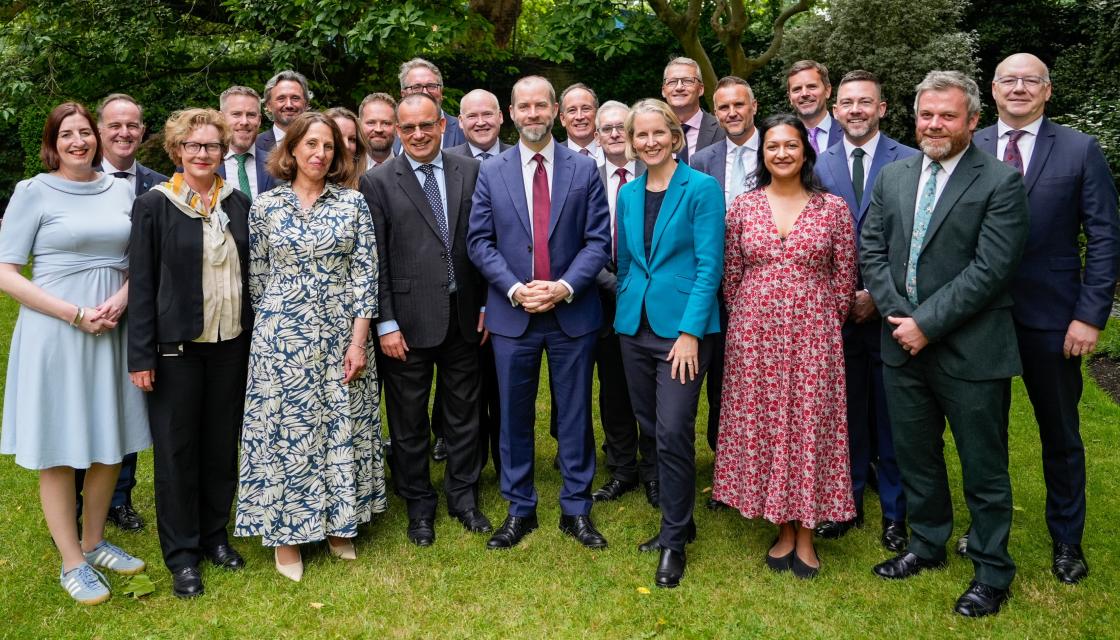
As co-operatives and mutuals gather in Parliament to mark the first birthday of the Mutuals Business Council, James Wright, Co-operatives UK’s Policy and Development Lead, looks at the progress made towards government’s ambition to double the sector, and why faster action on development funding, specialist finance and co-operative law is now needed.
Today (2 June 2026) co-operatives and mutuals will gather in Parliament to mark the first birthday of the Mutuals Business Council, writes James Wright, Policy and Development Lead at Co-operatives UK.
I'll be there, alongside our CEO Rose Marley and many of our members and partners. We'll hear from the two ministers who share responsibility for government’s commitment to ‘double the size’ of our sector. And we'll be paying close attention at a time when the action being taken to deliver on growth comes under scrutiny.
In a decisive summer for government, you can view the ‘doubling’ agenda as microcosm of the wider story. Some big decisions have been made and some vital groundwork put in place. Ministers now need to build on this with bolder, faster action if the impact is to be visible by the next election.
Let’s just dial back and think about why doubling is important. Would a bigger co-operative economy really change the UK? Let’s think about genuinely popular societal action on climate and the environment. What about increased resilience in our communities, in our food system, in our digital stack (and the economy overall)? Who would like better health and social care? And who’s up for driving a forklift through increasingly toxic inequalities, not only in economics but in power and respect?
Doubling the size of the co-operative and mutual sector is a significant step towards all these things – and all while making an outsized contribution to a more inclusive and sustainable GDP along the way.
Of course, there are trade-offs in pursuing this agenda. Some renewables that could have attracted international investment, will instead be owned by communities. A slice of the funding that might have been used to advise a solo entrepreneur, will need to help a co-operative start-up instead. Rather than crowding investment into a traditional SME, some British Business Bank funding will instead do so for an ambitious platform co-operative. These are choices in pursuit of a better future.
On doubling, government is already doing significant things. The £1.1bn Local Power Plan may well be the biggest investment in economic democracy in the history of the UK. Community ownership is at the heart of the Pride in Place Strategy – and so it follows that a beautiful co-operative thread runs through government's flagship £5bn Pride in Place programme. Meanwhile, £30m of public money is being invested in growing credit unions and their legislation is being modernised. The FCA (Financial Conduct Authority) is also onboard with a commitment to improving the process for registering a mutual.
So what now?
On co-operative development, while there are brilliant prospects in the Local Power Plan and Pride in Place Strategy, we face an immediate crisis in funding. There’s 60% less in the ecosystem in 2026 compared to 2024! We need action. That’s why we (Co-operatives UK) have proposed that the Department for Business and Trade allocates £12m in the next three years to expand co-operative development. This vital money will help existing co-operatives grow and new co-operatives form through both new start-ups and conversions.
The Co-operative Development Unit in the Pride in Place Strategy should fund a programme of advice and support to help communities set up and run co-operatives – linked to the new Community Right to Buy. The new £30m Farmer Collaboration Fund should be open to developing new and exiting co-operatives.
We also propose that the British Business Bank allocates at least £7.5 million of its existing funds to schemes that cater to the distinctive features of co-operatives. We also recommend that government helps the sector develop its own specialist financing institutions, of the kind proven to succeed in France, Italy, Spain, Switzerland, Canada and South Korea. And we need HM Treasury to modernise co-operative law in this Parliamentary session, to enable more capital raising options, while adding protections for member control and common assets.
If government makes these bold choices this summer, they will be bearing fruit by the end of the Parliament. There is no time to waste.
